
News Shifters newsroom contributor covering timely updates, explainers and developing stories.
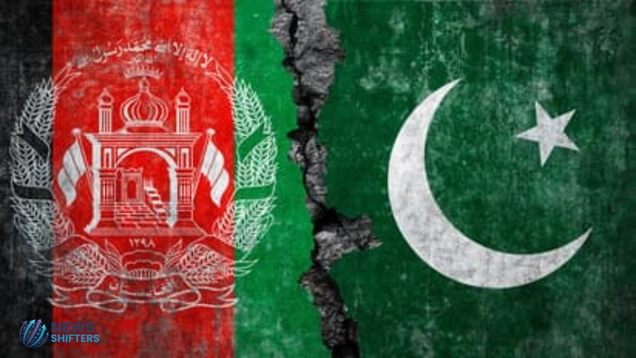
Peace talks between Pakistan Afghanistan have reached a standstill. Diplomats for both countries have failed to resolve security and border disputes. Tensions have grown on the border. Efforts to negotiate have carried on for weeks in both Islamabad, and Kabul, and have advanced very little to the point where they have become almost fragile.
Pakistan Afghanistan – The Start of the Peace Talks
Pakistan and Afghanistan peace talks began with a mutual desire to resolve rising violence along the border, the unregulated movement of fighters, and disruptions to trade.
While each party has a desire for mutual stability, positions on borders and the movement of fighters remain very far apart.
Pakistan’s Ministry of Foreign Affairs has pointed to the Pakistan Taliban border control has been Afghanistan’s primary talking point in the region. Taliban Afghanistan has accused Islamabad’s border control to connote military assaults and has accused control near the Durand Line to be a violation of Afghan borders.
Lack of political will in both countries, and violence have been and will be major contributing factors to the breaks in the flow negotiation.
Core Issues Behind the Deadlock
Cross-border militancy is the main issue behind the Pakistan Afghanistan deadlock. Pakistan has constantly attacked the issue of Tehreek-e-Taliban Pakistan (TTP), arguing Afghanistan is giving them a safe place to operate so they can attack Pakistan.
Afghanistan, on the other hand, argues that the focus should be on Pakistan’s internal security issues and they want more economic relations, not military relations.
Tensions have been high lately due to the Chaman-Spin Boldak situation and trade and travel relations have been temporarily suspended due to the situation.
Due to the lack of an effective cross-border conflict resolution mechanism, the repeated Tunisia and Pakistan clashes highlight the immeasurable and understated borderline.
Statements from Officials and Diplomatic Reactions
The Pakistan Afghanistan peace process, that the foreign relations spokesperson recently aligned proposed the office of Pakistan, must anchor on the doctrine of mutual appreciation and recognition of sovereignty.“We remain committed to a peaceful neighborhood,” said the statement. “Nevertheless, any terrorism coming from Afghan territory is unacceptable and needs to be dealt with.”
Following the recent border measures taken by Pakistan, Afghan officials expressed their disappointment, stating that measures impact the everyday lives of citizens and traders. Representatives from Kabul have encouraged both parties to elevate tense situations by seeking to strengthen agreements regarding trade to help rekindle trust.
Global and regional players, as well as the UN Assistance Mission in Afghanistan (UNAMA), have called for both sides to exercise restraint. A UNAMA statement recommended both countries “engage constructively for long-term peace and development in the region.” (Do Follow external link)
Impact on Trade and Regional Stability
The reached lower point of Pakistan Afghanistan relations inhibits the potential for regional collaboration within South and Central Asia. Trade is stalled and the movement of key goods (medicine, food, fuel) is being limited.
According to economists, the longer the political swill, the worse Afghanistan’s needed imports and Pakistan’s key Central Asia’s export trade routes will be affected. The Pakistan Afghanistan Transit Trade Agreement (APTTA) has been a disappointment as relations within the region have continued to decline.
Your website’s internal analysis also underscores the potential benefits to trade, and the relative economic healing that could be achieved through sustained dialogues and collaboration on security matters.
Conclusion
As Pakistan Afghanistan peace negotiations remain deadlocked, experts stress the urgency for both nations to rebuild trust through transparent communication and regional cooperation. The window for negotiations is closing fast, and the longer the deadlock, the higher the sense of economic despair and the gravity of the situation.
There is a consensus among South Asian diplomats that the state of Pakistan Afghanistan relations is crucial for the development of the border regions and the geopolitical situation of the larger South Asian region.
Read more news on newsshifters.xyz